
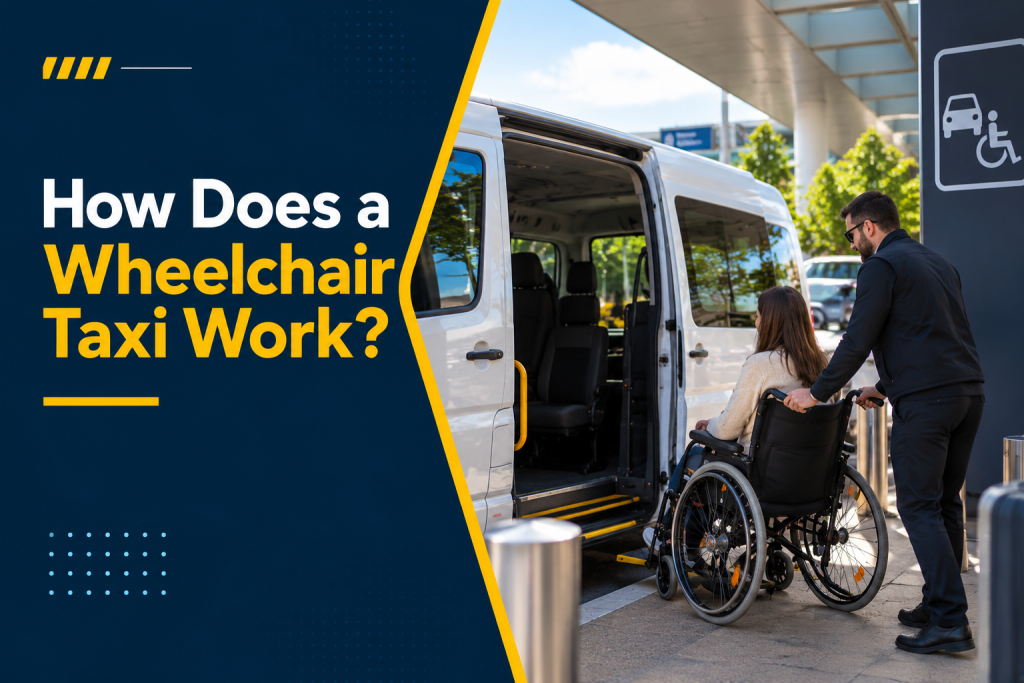
If you’ve never booked one before, the idea of a wheelchair taxi can feel a little unfamiliar. How does boarding actually work? Is the wheelchair secured safely? What happens during the ride if something needs adjusting? These are completely normal questions, especially for first-time users or family members arranging transport for a loved one. This guide walks through exactly how a wheelchair taxi works in Melbourne, from booking to drop-off, so you know what to expect before your very first ride.
What is a Wheelchair Taxi?
A wheelchair taxi is a specially modified vehicle designed to transport passengers who use a wheelchair without requiring them to transfer out of it. Unlike a standard taxi, these vehicles are fitted with ramps or hydraulic lifts, secure anchoring systems, and enough interior space to accommodate a wheelchair safely for the entire journey. They’re built specifically with accessibility, comfort, and safety in mind, rather than being a regular vehicle with a few small adjustments.
Step 1: Booking the Ride
The process starts the same way any taxi booking does — over the phone, through an app, or via a website. However, a good provider will usually ask a few extra questions during booking, such as:
- The type of wheelchair (manual or electric)
- Whether the passenger will remain in the wheelchair for the full trip
- Pickup and drop-off locations, including any access considerations
- Whether a carer or additional passenger will be travelling along
This information helps the company send an appropriately sized vehicle and ensures the driver arrives prepared, rather than working it out on the spot.
Step 2: Vehicle Arrival and Positioning
Once the vehicle arrives, the driver positions it carefully to allow safe, level access for the ramp or lift. Depending on the vehicle, boarding happens in one of two ways:
Ramp access: A manual or motorised ramp extends from the rear or side of the vehicle, allowing the passenger to wheel directly inside without needing to be lifted.
Hydraulic lift access: For larger vehicles or passengers who need extra support, a hydraulic lift gently raises the wheelchair into the vehicle at a controlled, steady pace.
Either way, the driver is trained to guide the process safely, making sure there’s no rushing and that the passenger feels comfortable throughout.
Step 3: Securing the Wheelchair
This is arguably the most important part of how a wheelchair taxi works. Once inside, the wheelchair is locked into place using a four-point restraint system, similar in concept to how a car seat is secured, but designed specifically for wheelchairs. The passenger is then also secured with a seatbelt, just as any other passenger would be. This double-layer of security — the wheelchair itself and the passenger separately — is what makes wheelchair taxi travel genuinely safe, even during sudden stops or longer trips.
Drivers are trained to check that:
- The wheelchair brakes are engaged
- All four restraint straps are properly tensioned
- The seatbelt fits securely without restricting comfort
- Any mobility aids (like an oxygen tank or bag) are also safely stored
Step 4: During the Ride
Once everything is secured, the journey itself is much like any other taxi ride, just with a smoother and more cautious driving style. Drivers are generally trained to avoid harsh braking or sharp turns where possible, keeping the ride as comfortable as it can be. If the trip is a longer one, drivers are usually happy to check in occasionally to make sure the passenger remains comfortable.
Step 5: Drop-Off and Unloading
At the destination, the process is simply reversed. The wheelchair restraints and seatbelt are released first, the ramp or lift is lowered, and the passenger exits at their own pace with the driver assisting only where needed. A good driver won’t rush this part either — safety and dignity matter just as much at the end of the trip as at the beginning.
Types of Vehicles Used for Wheelchair Transport
Not every wheelchair taxi looks the same. Depending on the provider and the passenger’s needs, vehicles can range from modified sedans to larger vans capable of carrying multiple wheelchair users alongside other passengers. The right vehicle often depends on factors like group size, so it’s worth checking seating capacity with the provider ahead of time, especially for family trips or group bookings.
Who Can Use a Wheelchair Taxi?
Wheelchair taxis aren’t only for passengers who use wheelchairs full-time. They’re also commonly used by:
- Elderly passengers with mobility limitations
- People recovering from surgery or injury
- Passengers using mobility scooters (subject to vehicle compatibility)
- Families travelling together, including a carer or support person
This flexibility is part of what makes wheelchair taxis such a practical option for everyday travel, not just occasional or emergency use.
Are Wheelchair Taxi Drivers Specially Trained?
Yes, and this is a key part of what makes the service reliable. Drivers typically undergo specific training in safe wheelchair loading and unloading procedures, restraint systems, and passenger assistance techniques. Many providers also require accreditation that goes beyond a standard taxi license, reflecting the added responsibility involved in transporting passengers with mobility needs.
Common Situations Where This Service is Used
Wheelchair taxis are booked for a wide range of everyday and planned trips, including medical appointments, family outings, and even airport transfers when flying interstate or overseas. Because the vehicle and process stay consistent regardless of the occasion, passengers can expect the same level of care whether it’s a routine local trip or a longer, more time-sensitive journey.
What About Cost and Funding Support?
Many passengers wonder whether wheelchair taxi travel is affordable compared to standard transport. In most cases, fares follow similar metered pricing to regular taxis. Additionally, some trips may be eligible for NDIS coverage, particularly when travel is linked to essential activities such as medical care or community participation, which can help ease the overall cost for eligible participants.
Final Thoughts
Understanding how a wheelchair taxi works can make the entire experience feel far less intimidating, especially for first-time users. From the moment of booking to secure boarding, a comfortable ride, and safe drop-off, every step is designed around accessibility, dignity, and safety. Knowing what to expect ahead of time makes it much easier to travel with confidence, whether it’s a routine appointment or a special occasion.
Frequently Asked Questions
How does a wheelchair get secured inside a wheelchair taxi?
The wheelchair is locked into place using a four-point restraint system, and the passenger is separately secured with a seatbelt, similar to standard vehicle safety practices.
Can I stay in my wheelchair for the entire trip?
Yes, wheelchair taxis are specifically designed so passengers don’t need to transfer out of their wheelchair at any point during the journey.
Do wheelchair taxi drivers receive special training?
Yes, drivers are typically trained in safe loading, securing, and passenger assistance procedures, often requiring accreditation beyond a standard taxi license.
Are wheelchair taxis suitable for electric wheelchairs?
In most cases, yes, though it’s a good idea to mention the wheelchair type when booking so the right vehicle and equipment can be arranged.
Is a carer allowed to travel along in a wheelchair taxi?
Yes, most providers accommodate a carer or additional passenger, as long as it’s mentioned at the time of booking so appropriate seating is arranged.
Summary
Wheelchair taxis are built around one simple goal — making travel genuinely accessible without compromising on safety or comfort. From ramp or lift boarding to secure restraint systems and trained drivers, every part of the process is designed to give passengers confidence from pickup to drop-off. For those in Melbourne looking for dependable, accessible transport, Wheelchair Cab Melbourne offers a service built around these exact principles, whether it’s for a routine appointment, a planned trip, or day-to-day travel needs.