
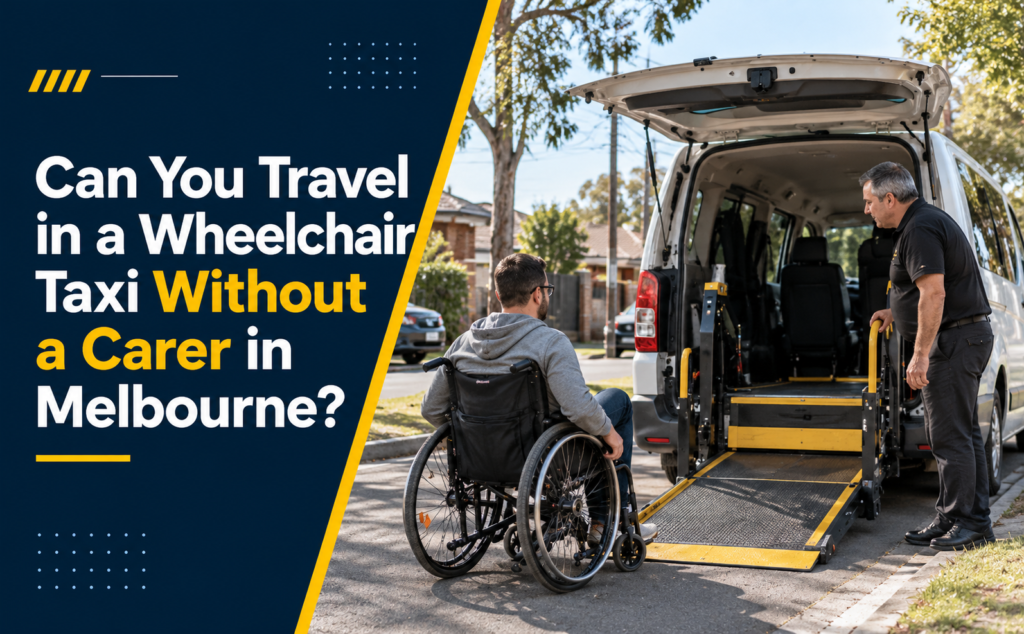
Travelling independently is important for many people who use wheelchairs. Whether you need to attend an appointment, visit family, go shopping, or travel to the airport, having access to suitable transport can make everyday activities easier. However, one common question is whether you can travel in a wheelchair taxi without a carer in Melbourne.
Yes, in many cases, a person who uses a wheelchair can travel in a wheelchair taxi without a carer. However, whether travelling alone is suitable depends on the person’s individual support needs, the assistance required during the journey, and the transport provider’s service arrangements. Using a wheelchair does not automatically mean someone needs a carer, but some passengers may require additional support beyond what a taxi driver can provide.
Understanding the difference between transport assistance and personal care can help you decide whether to book a wheelchair taxi independently or arrange for a family member, carer, or support worker to accompany you.
Can You Book a Wheelchair Taxi Without a Carer in Melbourne?
A wheelchair taxi can be a practical transport option for someone who can manage their journey independently or whose support needs can be met through the transport arrangements available.
For example, a passenger may be comfortable travelling alone if they can communicate their destination, manage their personal needs during the trip, and safely travel using their wheelchair or an appropriate vehicle seat. They may only need help with the vehicle’s ramp or lift, wheelchair positioning, and securing the mobility device.
Other passengers may need someone to accompany them because they require personal assistance, ongoing supervision, or help at their destination.
There is no single answer that applies to everyone. Before booking, consider what support you need when leaving home, entering the vehicle, travelling, and reaching your destination.
If you are unsure what to expect from the service, understanding how a wheelchair taxi works can help you prepare for the journey.
Who May Be Able to Travel Alone in a Wheelchair Taxi?
Travelling without a carer may be suitable for passengers who can manage the parts of the journey that fall outside the driver’s transport responsibilities.
The following factors can help you assess whether an independent trip is practical.
1. You Can Communicate Your Travel Requirements
You should have a reliable way to communicate your pickup details, destination, and any important instructions. This does not necessarily mean speaking verbally. You may communicate through writing, gestures, a communication device, or another method that works for you.
When making a reservation, tell the provider about any communication arrangements that will help make the pickup straightforward.
Victorian guidance for wheelchair-accessible vehicle drivers emphasizes respectful communication, patience, and asking passengers how they prefer to communicate. You can read the official Safe Transport Victoria guidance for more information.
2. You Know What Assistance You Need
Some wheelchair users manage most aspects of travel independently but need help with specific tasks, such as using a ramp or securing their wheelchair inside the vehicle.
If this describes your situation, explain your requirements when booking. The provider can then confirm what assistance is available and whether the vehicle is suitable.
However, if you need someone to lift or transfer you between surfaces, provide personal care, or assist with tasks beyond the driver’s role, you should discuss these needs before the journey and consider arranging an appropriate support person.
3. You Can Manage the Journey and Your Personal Needs
Consider what will happen throughout the trip, not just during the ride itself.
For a short journey to a familiar location, you may already know what to expect and how to manage independently. A longer journey, an unfamiliar destination, or an appointment involving additional steps may require more planning.
Think about whether you will need assistance with personal care, medication, communication, finding the correct entrance, or navigating the destination after leaving the vehicle.
If you need help with any of these tasks, determine who will provide it before you travel.
What Assistance Can a Wheelchair Taxi Driver Provide?
A key consideration when travelling without a carer is understanding the type of assistance a wheelchair taxi driver can provide.
In Victoria, Safe Transport Victoria states that drivers of wheelchair-accessible vehicles are required to provide reasonable assistance to passengers entering or leaving the vehicle. This includes using accessibility equipment safely, respecting the passenger’s instructions, and handling mobility aids appropriately.
Depending on the circumstances and available equipment, assistance may include:
- Operating the vehicle’s wheelchair ramp or lift safely.
- Helping position the wheelchair for boarding.
- Securing the wheelchair and relevant restraints correctly.
- Providing reasonable assistance when entering or leaving the vehicle.
- Assisting with luggage or mobility equipment when requested and safe to do so.
The exact assistance available should be confirmed with the provider before your trip.
What a Taxi Driver Cannot Automatically Be Expected to Do
A wheelchair taxi driver is primarily responsible for providing transport and appropriate assistance associated with the vehicle. Booking a wheelchair taxi does not automatically mean that a personal carer or support worker will be available.
For example, you should not assume that the driver can provide personal care, help with toileting, administer medication, monitor an ongoing medical condition, or supervise you throughout an appointment.
Similarly, do not assume the driver will accompany you inside a building or remain with you after drop-off. Discuss any special arrangements directly with the provider rather than relying on them being included in a standard booking.
Understanding these limits is important when deciding whether you can comfortably complete the whole journey without additional support.
When Should You Arrange a Carer or Support Worker?
A carer is not automatically necessary for every wheelchair taxi journey. However, there are situations where travelling with a family member, carer, or support worker may be more appropriate.
When You Need Personal Care or Physical Assistance
If you need help with transferring between your wheelchair and another seat, personal care, toileting, or other physical tasks that fall outside the driver’s role, arrange suitable assistance before travelling.
Do not assume that a taxi driver can safely perform lifting or personal care tasks. Discuss your requirements with the transport provider and your regular support team so that the arrangements are appropriate.
When You Need Ongoing Supervision
Some passengers may need support with communication, orientation, decision-making, or managing a condition during travel. Others may feel more comfortable having a familiar person accompany them to an unfamiliar location.
In these circumstances, a carer or support worker can help with tasks that a driver is not responsible for providing.
When Travelling to a Hospital or Medical Appointment
A wheelchair taxi can help you get to a hospital or medical appointment, but transport does not necessarily include assistance inside the facility.
You may need someone to help with reception, appointment check-in, communication with staff, or arrangements after the appointment. If you are planning a medical journey, consider what support will be available both before and after the ride.
This is especially important if you expect to feel unwell, receive treatment, or need assistance returning home. For more planning advice, see these tips for hospital appointments.
How to Book a Wheelchair Taxi If You Are Travelling Alone
Once you have decided that an independent journey is appropriate, a few simple steps can help you arrange transport with greater confidence.
1. Explain Your Requirements When Booking
Provide your pickup address, destination, preferred travel time, and any relevant accessibility requirements.
Let the provider know that you will be travelling without a carer and explain the specific assistance you need. You do not need to provide unnecessary private medical details, but you should communicate anything that may affect safe boarding, travelling, or drop-off.
2. Confirm the Vehicle Is Suitable
Not every accessible vehicle has the same configuration. Confirm that the vehicle can accommodate your wheelchair or mobility device and that the necessary ramp, lift, and securement arrangements are available.
If you intend to remain seated in your wheelchair during the trip, tell the provider in advance. The vehicle and mobility device must be suitable for this arrangement, and the wheelchair and passenger must be secured correctly.
3. Plan Your Pickup and Drop-Off
Make sure the driver can identify your pickup location. If you live in an apartment complex, retirement village, or large residential building, provide clear instructions for finding the entrance.
Also consider what happens when you reach your destination. Confirm whether the drop-off point is suitable and whether someone will meet you if you require assistance beyond the vehicle.
For new passengers, reviewing the steps involved in booking a wheelchair taxi can help you prepare the necessary details.
4. Book in Advance When Possible
Advance booking gives you time to discuss special requirements and confirm that an appropriate vehicle is available. This can be particularly helpful for medical appointments, airport journeys, and trips scheduled at specific times.
If you need a return journey, ask whether you should book both trips together or arrange the return separately. Make sure you understand the pickup arrangements for each leg of your journey.
5. Keep Important Contact Details Accessible
Before leaving, make sure you have the provider’s contact information and your booking confirmation. If your plans change or you need to clarify the pickup arrangement, having these details available can make communication easier.
If you are unfamiliar with the destination, save the address and any relevant entry instructions on your phone or in an accessible format.
Is It Safe to Travel Alone in a Wheelchair Taxi?
Safety depends on the passenger’s needs, the suitability of the vehicle, the quality of the booking arrangements, and the support available at the destination.
Before travelling alone, consider the following questions:
- Can I communicate with the driver about my destination and requirements?
- Can my wheelchair or mobility device be accommodated and secured correctly?
- Do I know what assistance the driver can provide?
- Can I manage my personal needs throughout the journey?
- Will I be able to reach my destination and complete my appointment independently?
- Is additional support available if I need it?
If you can answer these questions confidently, an independent journey may be practical. If you are uncertain about any part of the trip, contact the provider or your support team before booking.
The aim is not simply to arrange a ride. It is to ensure that the entire journey, from pickup to arrival, has been planned around your needs.
Frequently Asked Questions
Can a wheelchair user travel alone in a taxi in Melbourne?
Yes, many wheelchair users can travel alone if their individual needs can be met through the transport arrangements available. Whether this is suitable depends on the support they require during the journey and at their destination.
Does a wheelchair taxi driver help passengers get into the vehicle?
Drivers of wheelchair-accessible vehicles in Victoria are required to provide reasonable assistance when passengers enter or leave the vehicle. Confirm your particular requirements with the provider before booking.
Can I travel without a carer if I use an electric wheelchair?
Possibly. You should confirm that the vehicle can accommodate your electric wheelchair and that the necessary securement arrangements are available. You should also consider whether you need additional personal support during the journey.
Can a wheelchair taxi driver act as my carer?
A taxi driver provides transport and appropriate assistance associated with the vehicle. You should not assume that the driver can provide personal care, ongoing supervision, or support at your destination. Arrange a carer or support worker if those services are necessary.
Should I tell the taxi company that I am travelling alone?
Yes. Informing the provider helps you explain your accessibility requirements and confirm what assistance is available. It also gives you an opportunity to discuss pickup and drop-off arrangements before the journey.
Can I travel alone to a hospital appointment in a wheelchair taxi?
You may be able to travel alone if you can manage the journey and your appointment-related needs independently. Consider whether you will need assistance inside the hospital, during the appointment, or on the return journey before making your booking.
What should I do if I am unsure whether I can travel without a carer?
Discuss your support requirements with the taxi provider and, where appropriate, your regular carer, support coordinator, or healthcare professional. They can help you consider the assistance needed for the full journey.
Final Words
Travelling in a wheelchair taxi without a carer in Melbourne may be suitable for people who can manage their journey independently and whose support needs can be met through the transport service. Before booking, confirm the available assistance, vehicle compatibility, wheelchair securement, and pickup and drop-off arrangements. If you need personal care or ongoing supervision, arrange appropriate support rather than relying on the taxi driver to provide it.
Wheelchair Cab Melbourne provides a local transport option for passengers who need wheelchair-accessible travel. Contact the provider to discuss your individual requirements, confirm vehicle availability, and plan a journey that supports your comfort, safety, and independence.