
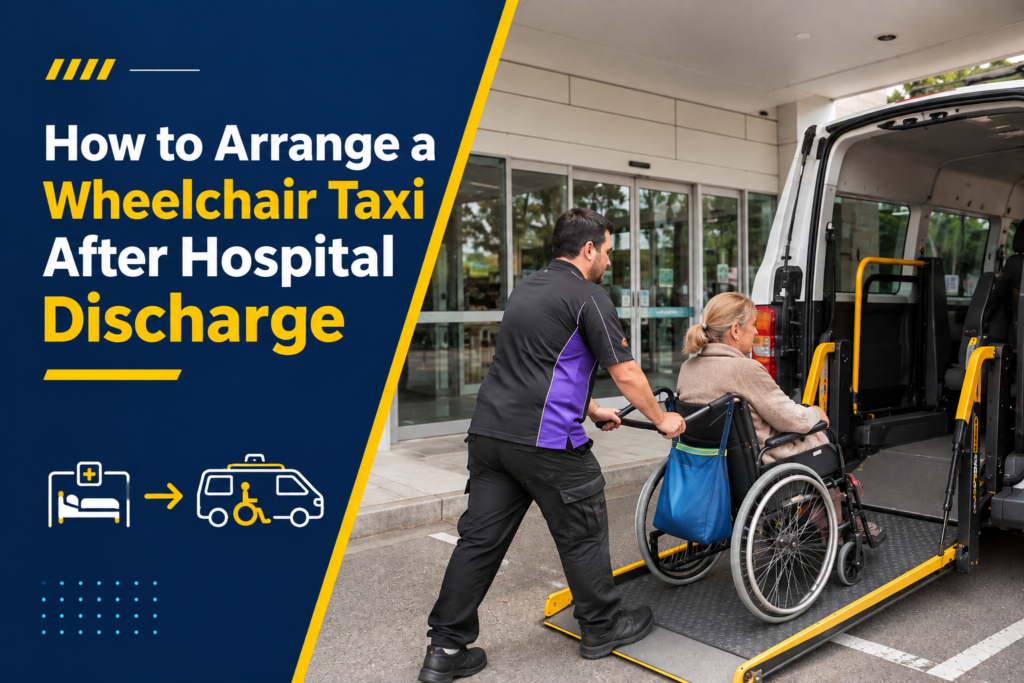
Leaving the hospital after surgery, medical treatment, or an extended stay requires careful planning, particularly for patients who use wheelchairs. Once the hospital confirms that a patient is ready to go home, arranging suitable transport becomes an important part of the discharge process.
However, travelling home in a standard taxi or private vehicle may not always be practical. Patients who use manual or powered wheelchairs may need a specially equipped vehicle with suitable boarding facilities, wheelchair restraints, and enough space for an accompanying family member or carer.
So, how do you arrange a wheelchair taxi after hospital discharge in Melbourne? The process involves understanding the patient’s mobility requirements, selecting a suitable accessible vehicle, providing accurate hospital pickup details, and confirming the transport arrangements before leaving.
Whether you are organising transport for yourself, a parent, or another family member, this guide explains how to arrange a wheelchair taxi and what to consider for a smooth journey from hospital to home.
When Should You Arrange a Wheelchair Taxi After Hospital Discharge?
It is best to start planning transport as soon as the hospital begins discussing the patient’s expected discharge date. Waiting until the last moment can make it harder to find a suitable vehicle, especially when a specific wheelchair-accessible setup is required.
Hospital discharge does not always happen at an exact time. Patients may need to complete discharge paperwork, collect medication, receive final instructions, or wait for confirmation from the medical team.
Contacting a transport provider in advance gives you time to discuss vehicle availability and explain the patient’s requirements.
Consider arranging transport early if:
- The patient will remain seated in their wheelchair during the journey.
- A powered wheelchair or larger mobility device is being used.
- A family member or carer needs to travel with the patient.
- The hospital has a specific patient collection area.
- The discharge is expected during a busy travel period.
You can discuss a provisional pickup arrangement with the provider if the exact discharge time has not yet been confirmed.
How to Arrange a Wheelchair Taxi After Hospital Discharge in Melbourne
Arranging accessible hospital transport becomes easier when you follow a clear booking process. Here are the main steps to consider.
1. Understand the Patient’s Mobility Requirements
Before booking, find out how the patient will travel inside the vehicle.
Some passengers remain seated in their manual or powered wheelchairs, while others can transfer to a regular passenger seat. This distinction is important because not every accessible vehicle or wheelchair restraint system is suitable for every mobility device.
When contacting the transport provider, explain:
- Whether the passenger uses a manual or powered wheelchair.
- Whether they will remain seated in their wheelchair during travel.
- Whether they can transfer to a regular vehicle seat.
- Whether they need a ramp or hydraulic lift.
- Whether a walking frame or additional mobility equipment will accompany them.
Providing these details helps the provider determine whether the available vehicle is suitable.
2. Select the Right Wheelchair-Accessible Vehicle
A standard taxi may not have the equipment or space needed to transport someone who needs to remain seated in a wheelchair.
A wheelchair-accessible vehicle is designed to make boarding easier through features such as ramps or hydraulic lifts. It may also have dedicated wheelchair restraint systems to help secure the wheelchair during the journey.
Before confirming your booking, check that the vehicle can accommodate the passenger’s wheelchair and that enough seating is available for an accompanying family member or carer.
You should also discuss the wheelchair’s approximate dimensions and weight if the provider requests this information.
3. Provide Accurate Hospital Pickup Details
Hospital premises can be large, with several entrances, buildings, wards, and designated patient collection areas. Providing only the hospital name may not be enough for the driver to locate the correct pickup point.
When arranging your booking, share the following information:
- Full hospital name and street address.
- Ward or department, if relevant.
- Designated patient collection entrance.
- Expected discharge date.
- Approximate pickup time.
- Contact number for the passenger or accompanying person.
If the hospital has specific instructions for patient collection, confirm them with the ward staff and communicate them to the transport provider.
4. Confirm the Expected Discharge Time
Coordinating the pickup time is one of the most important parts of arranging hospital discharge transport.
A patient may be medically cleared but still need additional time to complete paperwork, collect medication, or receive final instructions. As a result, the actual departure time may differ from the initial estimate.
Share the expected discharge window with the provider and ask how changes to the pickup time should be communicated.
If the hospital delays the discharge, contact the transport provider as soon as possible to discuss an updated collection time.
5. Confirm the Destination and Additional Passengers
Provide the complete destination address when making the booking. This could be the patient’s home, an aged care facility, a rehabilitation centre, or another residential address.
If the destination has access restrictions, such as a narrow driveway, limited parking, or a particular entrance, mention these details beforehand.
Also confirm whether a family member, carer, or support worker will accompany the patient. This helps the provider arrange a vehicle with enough available seating.
What Information Is Required When Booking a Wheelchair Taxi?
Having the necessary details ready can make the booking process quicker and reduce confusion on the day of discharge.
| Booking Detail | Information to Provide |
| Passenger information | Name and contact number |
| Hospital details | Hospital name and complete address |
| Pickup location | Ward, department, or collection entrance |
| Discharge schedule | Expected date and pickup time |
| Wheelchair type | Manual or powered wheelchair |
| Mobility requirements | Ramp, lift, or transfer requirements |
| Additional passengers | Family member, carer, or support worker |
| Destination | Complete home or facility address |
| Special requirements | Mobility equipment or other relevant needs |
If you are arranging transport for someone else, keep a contact number available so the provider can reach you if the pickup time or location changes.
Can a Family Member Book a Wheelchair Taxi for a Patient?
Yes. A family member, carer, or support person can contact a transport provider and arrange a wheelchair taxi on behalf of a patient.
This is particularly helpful when the passenger is recovering from surgery or treatment and may not be able to manage the booking independently.
The person making the reservation should provide accurate information about the passenger’s mobility, wheelchair type, hospital location, expected discharge time, and destination.
It is also useful to remain available by phone on the day of collection. If the hospital changes the discharge time or pickup location, you can communicate the updated information to the provider.
If you are unfamiliar with the wheelchair taxi booking process, checking the required details before contacting a provider can help you prepare for the journey.
What Should You Check Before Leaving the Hospital?
Before the patient leaves the hospital, make sure the discharge and transport arrangements are clearly understood.
Here are some important things to check:
Discharge clearance: Confirm with the healthcare team that the patient is ready to leave and that the planned transport method is appropriate for their condition.
Medication and documents: Collect prescribed medication, discharge paperwork, follow-up instructions, and any other documents provided by the hospital.
Mobility equipment: Make sure the patient’s wheelchair, cushions, walking frame, and other essential equipment are ready.
Pickup confirmation: Recheck the transport provider’s pickup time, collection point, and contact details.
Destination arrangements: Make sure someone can receive the patient at home or at the destination, particularly if additional assistance is required after arrival.
Travel comfort: Discuss any seating or positioning requirements with the healthcare team and transport provider before departure.
Victoria’s Better Health Channel recommends arranging transport home before leaving hospital and starting discharge planning early. Its hospital discharge guidance also explains why patients should discuss their ongoing care requirements with the healthcare team.
What Assistance Does a Wheelchair Taxi Provide?
A wheelchair-accessible taxi is intended to provide accessible passenger transport. Depending on the vehicle and service, assistance may include helping passengers board using a ramp or lift, securing the wheelchair, and coordinating entry and exit from the vehicle.
However, accessible transport should not be confused with medical care or personal support.
For example, a driver should not be expected to provide nursing care, administer medication, monitor medical conditions, or perform clinical procedures during the journey.
If the passenger needs help with vehicle boarding, explain their requirements when arranging the booking. You can also read about how wheelchair taxis work to understand the general boarding and transport process.
Is a Wheelchair Taxi Suitable for Every Hospital Discharge?
Not necessarily. The appropriate transport option depends on the patient’s medical condition and mobility requirements.
A wheelchair-accessible taxi may be suitable for a passenger who is medically stable, can travel without clinical monitoring, and needs an accessible vehicle to reach home.
However, some patients require medical supervision, specialised equipment, or clinical assistance during transport. In these situations, a standard wheelchair taxi may not be appropriate.
Victoria’s Non-Emergency Patient Transport (NEPT) service is intended for patients who require clinical care, monitoring, or supervision while travelling. Transport must be assessed and authorised by an appropriate healthcare professional.
If you are unsure which option is suitable, ask the hospital’s discharge coordinator or treating team before making a reservation.
For further information, refer to Ambulance Victoria’s patient transport guidance.
Why Is Advance Planning Important for Hospital Discharge Transport?
Planning ahead can make the transition from hospital to home more organised. It also gives the transport provider enough time to understand the patient’s requirements and arrange an appropriate vehicle.
A little preparation can help you:
- Confirm the availability of a suitable accessible vehicle.
- Share the patient’s wheelchair and mobility requirements.
- Arrange seating for a family member or carer.
- Coordinate the pickup with hospital discharge arrangements.
- Discuss the fare and any applicable waiting charges.
- Avoid last-minute confusion about the collection point.
When comparing a wheelchair taxi service, check the available vehicle features, passenger capacity, booking arrangements, and whether the provider can accommodate the patient’s specific mobility needs.
Keeping communication clear between the family, hospital staff, and transport provider can make the journey home easier to organise.
Frequently Asked Questions
How do I book a wheelchair taxi after a hospital discharge in Melbourne?
Contact a wheelchair taxi provider by phone or through its online booking form. Share the hospital address, expected discharge time, wheelchair type, destination, passenger count, and any additional requirements.
Can I arrange a wheelchair taxi before the hospital confirms the discharge time?
Yes. You can contact a provider in advance to discuss availability and make a provisional arrangement if offered. Confirm the final pickup time once the hospital provides an updated discharge estimate.
Can a family member travel with the patient in a wheelchair taxi?
Yes, an accompanying family member or carer may be able to travel with the patient, depending on the vehicle’s available seating capacity. Mention this requirement when booking.
Can a wheelchair taxi accommodate a powered wheelchair?
Some accessible vehicles can accommodate powered wheelchairs. However, compatibility depends on the wheelchair’s dimensions, weight, and the vehicle’s lift and restraint specifications. Confirm these details with the provider before booking.
What happens if the hospital discharge is delayed?
Contact the transport provider as soon as you know the pickup time has changed. They can discuss a revised collection time depending on driver and vehicle availability. Waiting charges or rescheduling conditions may apply.
Does a wheelchair taxi provide medical assistance during the journey?
A wheelchair taxi provides accessible transport rather than clinical care. If the passenger requires medical monitoring, treatment, or clinical supervision during travel, discuss Non-Emergency Patient Transport with the hospital team.
Can I arrange a wheelchair taxi from a private hospital in Melbourne?
Yes. You can request a pickup from a public or private hospital. Provide the complete address and designated collection point so the driver can coordinate the pickup.
Summary
Arranging a wheelchair taxi after hospital discharge in Melbourne becomes easier when transport is planned in advance and the patient’s requirements are clearly communicated. Confirm the mobility needs, choose a suitable accessible vehicle, provide accurate hospital pickup details, and keep the transport provider updated if the discharge schedule changes.
It is also important to confirm whether the patient can travel in a standard wheelchair-accessible taxi or requires clinically supported patient transport.
Wheelchair Cab Melbourne provides accessible transport options across Melbourne for hospital transfers, medical appointments, and everyday journeys. Planning the booking carefully and selecting a suitable vehicle can help patients and their families organise a more convenient journey from hospital to home.